Artículo: 5 Signs Your Pet Has Dental Disease (And What You Can Do About It)
5 Signs Your Pet Has Dental Disease (And What You Can Do About It)
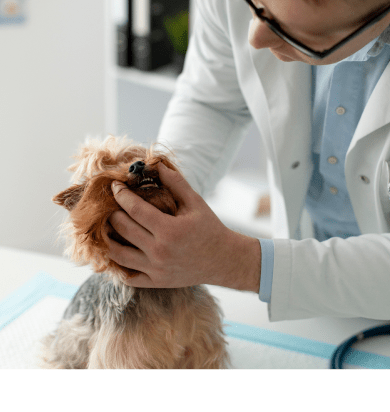
Most Pet Dental Disease Goes Unnoticed — Until It's Too Late
Did you know that by age 3, over 80% of dogs and 70% of cats show signs of periodontal disease? The problem is that pets are experts at hiding discomfort, and dental disease often progresses silently for months before owners notice anything is wrong.
Catching it early makes a huge difference — both for your pet's comfort and your wallet. Here are the five signs veterinarians look for, and what you can do right now to help.
Sign #1: Bad Breath (Halitosis)
A little "dog breath" is normal, but breath that smells strongly foul or rotten is not. Persistent bad breath is one of the earliest and most reliable indicators of bacterial buildup in the mouth. Healthy mouths don't smell offensive — if yours does, it's worth investigating.
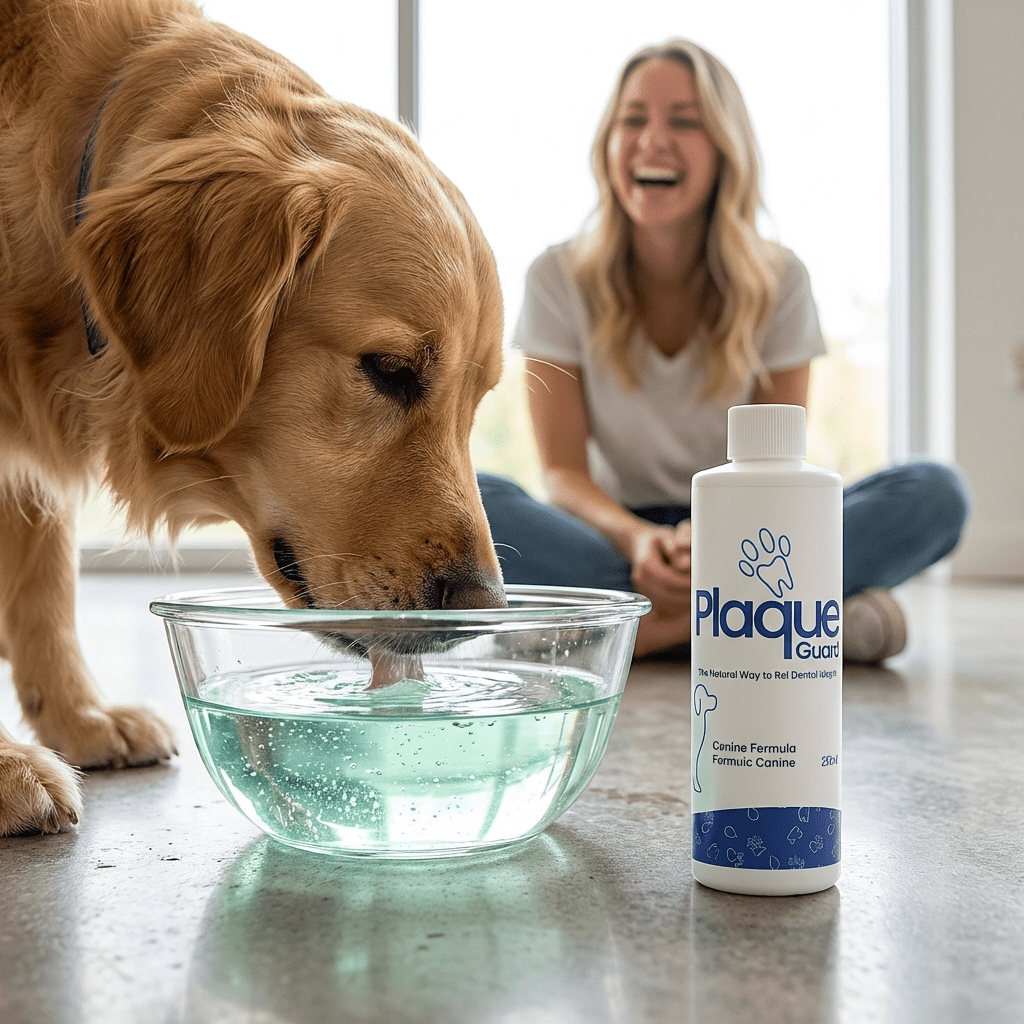
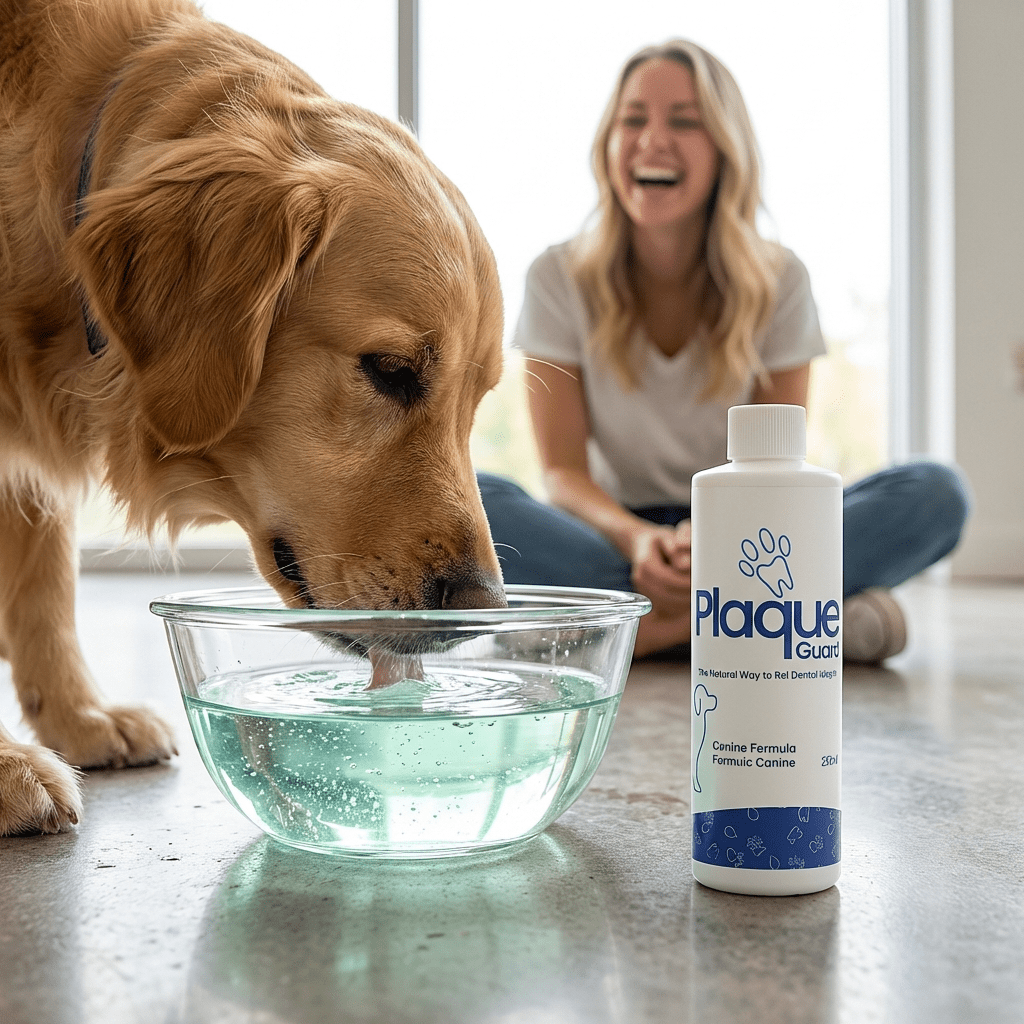
What to do: Start a daily oral hygiene routine. Even if brushing isn't realistic, adding a veterinarian-approved water additive like Plaque Guard for Dogs or Plaque Guard for Cats to their water bowl can significantly reduce the bacteria responsible for bad breath.
Sign #2: Yellow or Brown Buildup on Teeth
Plaque is the soft, sticky film of bacteria that forms on teeth after eating. Left untreated, it hardens into tartar (calculus) — the yellow or brown crust you can see along the gumline. Once tartar forms, it can only be removed by a professional dental cleaning under anesthesia.
What to do: Prevention is far easier than removal. Daily water additives work continuously to break down plaque before it mineralizes into tartar. The earlier you start, the better.
Sign #3: Red, Swollen, or Bleeding Gums
Healthy gums are pink and firm. If your pet's gums look red, puffy, or bleed when you touch them, that's gingivitis — the earliest stage of gum disease. At this stage, the condition is still reversible with proper care.
What to do: Gingivitis responds well to improved oral hygiene. Combine a water additive with regular dental chews and a vet check-up to get ahead of it before it progresses to periodontitis.
Sign #4: Difficulty Eating or Dropping Food
If your pet suddenly seems reluctant to eat, chews only on one side, or drops food from their mouth, they may be experiencing tooth pain. Pets rarely vocalize dental pain — behavioural changes at mealtime are often the only clue.
What to do: See your vet promptly. Pain at this level usually indicates advanced disease that needs professional treatment. After treatment, a preventive home care routine will help avoid recurrence.
Sign #5: Pawing at the Mouth or Face Rubbing
Pets that repeatedly paw at their mouth, rub their face on furniture, or shake their head may be trying to relieve oral discomfort. This is a late-stage sign that something is causing significant irritation — don't wait on this one.
What to do: Book a veterinary dental exam as soon as possible. Your vet can identify whether there's an infected tooth, abscess, or other issue requiring treatment.
The Easiest Thing You Can Do Starting Today
You don't need to brush your pet's teeth every day (though it helps). The simplest, most consistent thing you can do is add a veterinarian-formulated dental water additive to their bowl. It works passively — every time they drink, they're getting oral health support.
Our KOA Plaque Guard line is formulated with natural ingredients, approved by veterinarians, and available for both dogs and cats:
- Plaque Guard for Dogs 500ml
- Plaque Guard for Dogs 250ml
- Plaque Guard for Cats 250ml
- Plaque Guard for Cats 500ml
Small daily habits make a big difference. Start today — your pet's smile will thank you.